
Laparoscopic Cancer Surgery in Mohali
Personalised surgical oncology care for selected GI, colorectal, abdominal and gynaecological cancers—serving Chandigarh, Mohali, Panchkula and the wider Tricity region.
Personalised surgical oncology care for selected GI, colorectal, abdominal and gynaecological cancers—serving Chandigarh, Mohali, Panchkula and the wider Tricity region.
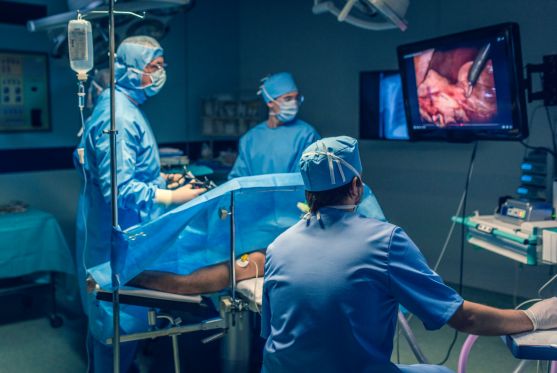
Laparoscopic cancer surgery is a minimally invasive surgical approach used for selected cancers. Instead of one large incision, the surgeon operates through small cuts using a high-definition camera and specialised instruments.
The objective remains the same as in open cancer surgery: safe removal of the tumour with appropriate oncological clearance. The approach is selected only when it is medically suitable and does not compromise cancer treatment principles.
Dr. Vijay Bansal has 15 years of experience in laparoscopic cancer surgery and has been associated with the advancement of minimally invasive cancer care in Tricity. Approximately one in six of his surgeries uses a laparoscopic or advanced minimally invasive approach, based on case suitability.
After complete diagnosis and staging, laparoscopy may be considered for selected patients with:

In appropriately selected patients, laparoscopic surgery may support a smoother recovery while maintaining the required cancer-surgery standards.
The procedure is performed through small cuts rather than one large conventional incision.
Some patients may experience less postoperative pain and easier early mobilisation.
Selected patients may be able to leave hospital earlier, depending on the procedure and recovery.
A minimally invasive approach may help suitable patients return to routine activities sooner.
Smaller wounds may reduce certain wound-related complications in selected cases.
High-definition magnified views can support careful dissection during suitable procedures.
Laparoscopic surgery is not automatically the best choice for every patient. Open surgery may be safer or more effective when the tumour is large, locally advanced, attached to nearby organs, close to major blood vessels, or technically unsuitable for a minimally invasive procedure.
The final recommendation is based on cancer type, stage, tumour location, previous treatment, overall health and whether complete cancer clearance can be achieved safely.
Every cancer case requires an individual treatment strategy. Dr. Vijay Bansal reviews all relevant reports and explains the appropriate surgical options to the patient and family.
A clear, step-by-step pathway from diagnosis to recovery.
Review of diagnosis, scans, cancer stage, previous treatment and medical fitness.
Selection of the safest open or minimally invasive approach for the individual case.
Multidisciplinary input from medical and radiation oncology when clinically required.
Postoperative guidance, pathology review and planning of further treatment or surveillance.
Dr. Vijay Bansal combines extensive clinical surgical experience with long-standing oncology and minimally invasive surgery expertise. His focus is on selecting the right operation for the right patient, rather than applying the same technique to every cancer case.
A second opinion can help you understand whether surgery is required, whether laparoscopy is suitable, and how surgery fits into the overall cancer treatment plan.
Bring available biopsy reports, CT/MRI/PET-CT scans, endoscopy reports, previous treatment records and current prescriptions.
Request a Second Opinion
General information about laparoscopic cancer surgery and patient suitability.
Laparoscopic cancer surgery can be safe and effective in appropriately selected patients. Suitability depends on cancer type, stage, tumour location, previous treatment and overall health.
No. Some cancers require open surgery because of tumour size, stage, location, involvement of nearby structures or the need for wider surgical access.
The goal of both laparoscopic and open cancer surgery is safe tumour removal with appropriate oncological clearance. Laparoscopy is recommended only when those objectives can be achieved safely.
Recovery varies according to the operation, cancer stage, patient health and whether additional treatment is required. Selected patients may experience a shorter hospital stay and earlier return to normal activity.
Suitability is determined after reviewing biopsy findings, imaging, cancer stage, tumour location, previous treatment and medical fitness.
Share your details for a surgical oncology consultation or cancer surgery second opinion at Livasa Hospital, Mohali.